Dubai Chocolate Recipe: The Perfect Pistachio Cream & Kataifi Crunch
Table of Contents
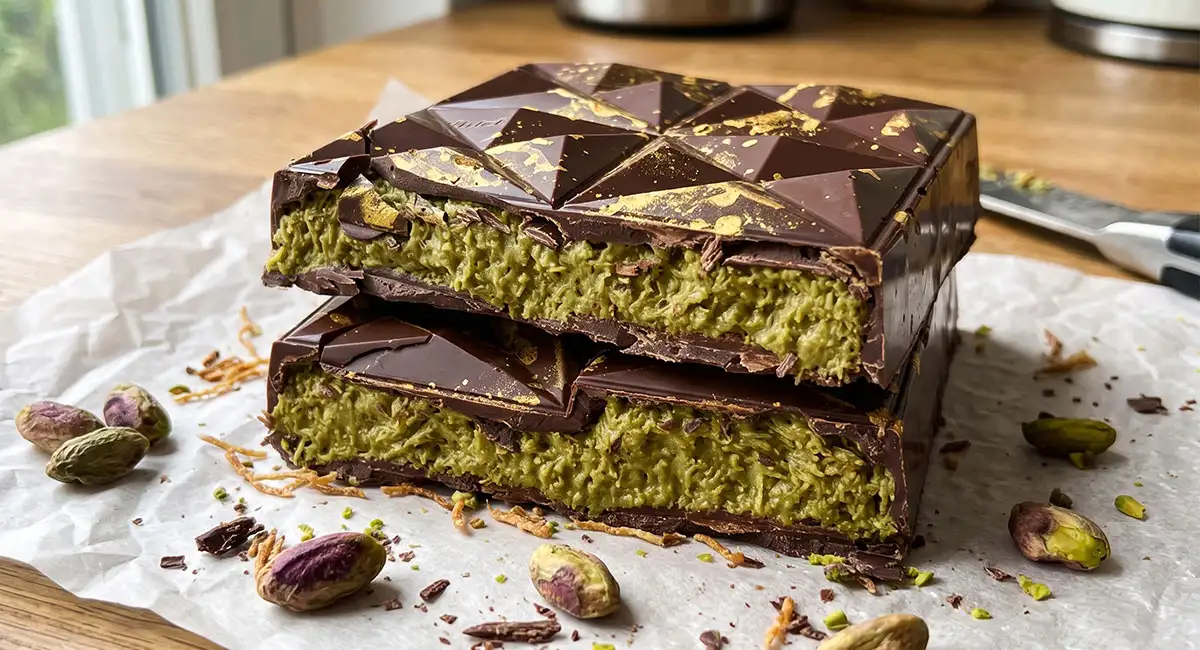
At a glance, making the viral Dubai Chocolate at home seems like magic, but it is actually wonderfully simple. Dubai chocolate recipe comes down to a rich chocolate shell giving way to a luxuriously thick, crunchy centre of toasted pastry and vibrant pistachio cream.
Whether you are making this as a weekend project with the kids or looking to perfect your professional pastry skills, the difference between a soggy disappointment and that world-famous snap lies in how you toast your pastry and the ratios you use.
In this recipe, we will walk you through the exact step-by-step process, before diving into our chef’s secrets on adjusting the filling ratio to get your perfect texture.
Ingredients You Will Need
While we have provided cup measurements to make things easy, we highly recommend using a digital kitchen scale (especially for the kataifi), as pastry volumes can change drastically depending on how tightly you pack the cups.
For the Filling:
Raw Kataifi Pastry: 100g (approx. 2 cups, loosely packed) – Usually found in the chilled or freezer section of specialty grocers.
Sweet Pistachio Cream: 200g (approx. ¾ cup) – Ensure it is a sweetened pistachio spread, not 100% pure paste.
Unsalted Butter: 40g (approx. 2 standard tablespoons) – For toasting the pastry.
Tahini (Sesame Paste): 20g (approx. 1 standard 20ml tablespoon) – This is the secret ingredient that balances the sweetness.
Flaky Sea Salt: A generous pinch to finish.
For the Shell:
Milk or Dark Couverture Chocolate: 400g (approx. 2 ½ cups chopped) – Couverture gives the best snap, but high-quality compound chocolate (choc melts) works for a quicker alternative.
Step-by-Step Instructions
Prep time: 25 mins | Cook time: 10 mins | Chill time: 45 mins | Yield: 3 to 4 large deep bars
Step 1: Prepare the Chocolate Shells
To achieve a professional snap without the chocolate melting on your fingers, your chocolate needs to be tempered. If you are using couverture chocolate, use the quick microwave method:
Place 300g of the chopped chocolate into a microwave-safe bowl. Heat in 30-second bursts, stirring thoroughly in between, until completely melted and smooth.
Add the remaining 100g of unmelted chocolate into the bowl. Stir continuously until the solid pieces melt and cool the mixture down.
Pour the chocolate into your deep cavity moulds. Swirl the mould to coat the deep walls evenly, then invert it over baking paper to let the excess drip out.
Scrape the top flat with an offset spatula and leave the shells to set completely at room temperature or in the fridge for 10 minutes.
Step 2: Toast the Kataifi Pastry
Proper toasting is the backbone of this dessert. The goal is an even, deep golden-brown colour.
Melt the butter in a large frying pan over medium-low heat.
Add the finely chopped kataifi pastry.
Stir continuously for 8 to 10 minutes. The butter acts as a protective barrier, coating the strands so they stay crispy later on.
Remove from heat once deeply golden and transfer to a wide bowl. Crucial step: Let it cool completely to room temperature.
Step 3: Emulsify the Filling
Never mix hot pastry directly with your pistachio cream. The heat will cause the oils in the cream to separate and split.
Once the toasted kataifi is completely cool to the touch, add the pistachio cream, tahini, and sea salt.
Fold everything together until the strands are thoroughly coated and you have a thick, cohesive paste.
Step 4: Assemble and Seal
Spoon the cooled filling into your set chocolate shells.
Press it down gently, ensuring you leave a 1.5mm to 2mm gap at the top edge of the mould. This “border margin” is vital for the final seal.
Pour your remaining tempered chocolate over the filling. Scrape the excess off with a spatula, ensuring the top layer connects perfectly with the side walls to lock the filling inside.
Chill in the fridge for 30 to 45 minutes. Once the chocolate shrinks slightly from the silicone, gently pop your bars out.
Chef’s Secrets: Perfecting Your Bar
Now that you know the basics, here is how you can elevate your chocolate from a simple home bake to a professional standard.
The Golden Ratio Matrix (By Weight)
Measuring shredded pastry in cups is the easiest way to accidentally create a dry filling. We always calculate our ratios based on the raw weight of the kataifi (before it absorbs butter). If you own a scale, try these variations to find your favourite texture:
The Signature Crunch (1.5 to 1): 100g raw kataifi + 150g pistachio cream. Best for maximum crunch and a very firm, clean cut.
The Classic Balance (2 to 1): 100g raw kataifi + 200g pistachio cream. Our top recommendation. It delivers a highly audible crunch with a rich, slightly yielding centre.
The Velvety Melt (2.4 to 1): 100g raw kataifi + 240g pistachio cream. Creates a saucy, flowing centre. Requires a slightly thicker chocolate shell to prevent leaking.
Choosing the Right Mould
The biggest mistake in your Dubai chocolate recipe is pouring this chunky filling into a standard, flat chocolate tablet mould. The filling needs vertical space, otherwise, your bottom shell will crack under pressure. You need a mould with an internal cavity depth of at least 15mm to 20mm.
For the classic viral look: Use a deep silicone tablet mould (like the Makia MSM87 Dubai Coffee Shop Mould). The flexible silicone ensures the deep, sharp corners release cleanly without leaving chocolate stuck behind.
For portion control: Use a smaller, deep-bar format (like the MSM86 Silicone Bar Mould). These are perfect for gifting or testing different filling ratios.
Troubleshooting Common Mistakes
Why is my kataifi soggy? This happens if the pastry wasn’t toasted long enough (leaving moisture inside the strands) or if it was mixed with the pistachio cream while still hot, causing it to steam.
Why is my filling leaking from the sides? You likely overfilled the mould. Always leave that 2mm gap at the top so the backing chocolate has a wall to grip onto and form a seal.
Why is the filling rock-hard when I eat it? Commercial pistachio creams contain fats that firm up in the cold. The golden serving rule: Always let your chocolate rest at room temperature for 10 to 15 minutes after taking it out of the fridge before eating.
Frequently Asked Questions
Can I make this with just 3 ingredients?
Yes, you can skip the butter and tahini, using only chocolate, kataifi, and pistachio cream. However, without butter, the crunch won’t last as long, and without tahini, the bar will be intensely sweet.
How long does homemade Dubai Chocolate last?
Stored in an airtight container in the fridge, it will easily last up to 2 weeks. However, for the absolute best crunch, we recommend consuming it within the first 3 to 4 days.
What can I use instead of tahini?
If you have a sesame allergy or simply dislike tahini, you can substitute it with roasted almond butter, cashew butter, or a spoonful of unsweetened 100% pure pistachio paste. The goal is simply to add an unsweetened, nutty fat to cut through the sugar.