

Metal Moulds & Baking Pans
Metal moulds are a practical choice for baking cakes, breads, tarts and other sweet or savoury recipes. They provide a firm structure and reliable heat transfer, while the shape, size and surface finish of each mould can affect how your bake cooks and releases.
At Makia Pastry Tools, you can explore metal moulds and baking pans in a range of shapes, depths and designs for home baking, pastry work and everyday kitchen use. Choose a mould based on your recipe, the size you need and the features that matter to you, such as a fixed or removable base or a non-stick surface.
Explore the collection to find the right metal mould for your next bake.
Find the Right Metal Mould for Your Bake
Choosing a metal mould based on what you plan to bake can help you select the right shape, depth and capacity for your recipe. Different bakes may require different levels of structure, surface area and heat exposure, so always check the product dimensions before making a purchase.
Cake Moulds
Cake moulds are available in different shapes, diameters and depths for recipes such as sponge cakes, brownies and layered cakes. Deeper moulds, including selected designs around 10cm high, may be suitable for taller cakes or recipes that require more vertical space. Moulds around 7cm high may suit many standard cake recipes, depending on the batter quantity and recipe instructions.
Always check the internal dimensions and product specifications to make sure the mould is suitable for the amount of batter you plan to use. Avoid filling any mould beyond the level recommended by the recipe or manufacturer.
Loaf and Bread Pans
Loaf pans have a narrow, elongated shape that is commonly used for loaf cakes, quick breads and selected yeast-based recipes. The length, width and depth of the pan affect the shape and thickness of the finished bake.
Before choosing a loaf pan, compare its internal dimensions with the recipe requirements. Some pans are designed mainly for cakes and quick breads, while others may be more suitable for bread or savoury baking.
Tart and Pie Moulds
Tart and pie moulds are designed for pastry-based recipes and are often shallower than standard cake tins. Fluted edges can create a traditional finish, while a removable base, where available, can make it easier to transfer the baked tart.
The suitable depth and base design depend on the pastry, filling and recipe. Check the product details before choosing a mould for a specific tart or pie.
Savarin and Ring Moulds
Savarin and ring moulds include a central opening that changes the shape of the bake and can help expose more of the batter to the heat of the oven. They are commonly used for ring cakes, savarin-style desserts and other recipes designed for this shape.
Because these moulds may include curves, grooves or detailed surfaces, preparation and release can depend on the recipe, surface finish and manufacturer’s instructions. Follow the recommended greasing or preparation method for the individual product.
Tahchin and Food Moulds
Metal moulds can also be used for selected savoury recipes, including tahchin and individual baked portions, when their size, depth and material are suitable for the recipe.
When choosing a mould for savoury food, consider the internal dimensions, depth, surface finish and how the finished dish will be removed. Do not assume that every cake mould is suitable for every food recipe. Check the product description and recipe requirements before use.
Baking Trays
Baking trays provide a broad surface for recipes such as biscuits, cookies, pastries and selected roasted foods. Unlike deeper cake tins, trays generally have a lower profile and are not designed to contain large quantities of liquid batter.
Compare the tray’s dimensions and edge height with the recipe you plan to prepare. The suitable tray may vary depending on the amount of food, the required spread and the available oven space.
Choose a Shape That Matches Your Recipe
The shape of a mould affects the appearance, thickness and surface area of the finished bake. It is important to choose a design that suits both the recipe and the consistency of the batter or mixture. A highly detailed mould, for example, may require careful preparation and may not be suitable for every delicate or low-structure mixture.
Depending on the recipe and product specifications, common options include:
- Round Moulds: Suitable for many traditional cakes, sponges and layered bakes.
- Square and Rectangular Moulds: Useful for brownies, traybakes, slices and recipes that need to be divided into even portions.
- Loaf Pans: Designed for loaf cakes, quick breads and selected bread or savoury recipes.
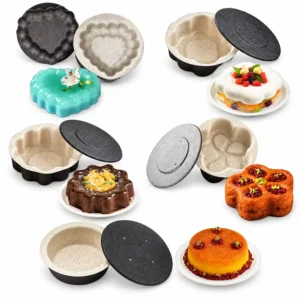
- Heart-Shaped Moulds: Suitable for themed cakes and desserts, provided the capacity and depth match the recipe.
- Floral and Patterned Moulds: Add decorative detail to the outside of a bake, but may require careful preparation for clean release.
- Savarin and Ring Moulds: Designed for ring-shaped cakes and desserts that suit a central opening.
- Single-Serving Moulds: Useful for individual cakes, desserts and selected savoury portions, depending on the material and dimensions.
How to Choose the Right Size and Height
Selecting the right dimensions is just as important as choosing the shape. A mould that is too large or too small can change the depth, texture and appearance of the finished bake.
Diameter, Length and Width: Consider the amount of batter or mixture required by the recipe. Small, medium and large moulds can differ considerably in capacity, even when their external appearance seems similar. Check the internal dimensions listed on the product page instead of relying only on photographs or general size descriptions.
Mould Height: The height of a mould affects the depth of the mixture and the final shape of the bake. A deeper mould may be suitable for taller cakes or recipes designed for additional vertical space, while a shallower mould may suit flatter cakes, slices and traybakes. The suitable height depends on the recipe, batter volume and product dimensions. Avoid overfilling the mould, and follow the filling guidance provided by the recipe or manufacturer.
Capacity: The apparent size of a mould does not always indicate its usable capacity. Internal shape, sloped sides, decorative details and multiple cavities can all affect the amount of mixture it holds. Refer to the specific product information and recipe instructions rather than relying on a generic conversion chart.
Shape and Baking Time: The shape, depth and material of a mould can affect how a recipe bakes. A wide, shallow mould may produce a thinner bake, while a narrow or deeper mould may produce a thicker centre. These differences can affect the baking time and may require closer monitoring. Use the recipe’s visual and texture cues, together with any manufacturer’s guidance, instead of applying one fixed baking time to every mould.
Understanding Metal Mould Materials and Finishes
Metal baking moulds are available in different materials and surface finishes. Their weight, heat response, release properties and care requirements can vary, so always check the individual product page for the exact material and instructions.
Galvanised Moulds: Galvanised moulds are made from steel with a zinc coating. Their suitability depends on the product design, intended use and manufacturer’s instructions. They should be kept dry after washing and stored according to the care guidance provided with the product. Do not assume that every galvanised item is suitable for every type of food preparation; check the product description before use.
Granite and Other Coated Moulds: In baking products, the term “granite” generally refers to the appearance or style of a coated surface rather than solid granite. The coating may help with food release and cleaning, but formulations and heat resistance can vary between products. Use the temperature limits and care instructions provided by the manufacturer. Avoid metal or abrasive utensils when the product instructions require non-scratch tools.
Aluminium and Steel Moulds: Aluminium can be lightweight and responsive to heat, while steel products may vary in weight, rigidity and heat response according to their composition and thickness. The performance of each mould depends on its specific design, so the product specifications should be checked before purchase and use.
Comparing Metal Finishes
When comparing finishes, consider the recipe, release requirements and care routine.
Uncoated moulds may require greasing, lining or another preparation method recommended by the recipe. Coated moulds may make release and cleaning more convenient, but their surface should be protected from scratching, excessive heat and unsuitable cleaning methods.
The most suitable option depends on the recipe, the required shape, the product specifications and the care instructions supplied by the manufacturer.
Choosing Metal Moulds for Home and Professional Baking
Whether you bake for family or run a small bakery, selecting the right metal pan is vital for your workflow.
For Home Bakers: Practical sizes and ease of use are key. Coated or granite moulds are excellent for everyday home baking, offering a simpler release and easier cleanup without needing professional preparation techniques.
For Professionals and Small Bakeries: Durability and consistency matter most. Professional decorators often rely on heavy-duty galvanised tins for their standard sizing, consistent heat distribution, and ability to withstand continuous daily baking.
For Plating and Fine Desserts: Precision is everything. Small ring moulds, tart pans, and individual serving tins provide the sharp edges and clean lines required for high-end presentation and portion control.
Why Choose Metal Moulds from Makia?
Finding the exact dimensions and depths for specific recipes can be challenging in standard supermarkets. At Makia Pastry Tools, we focus on providing a diverse and practical selection of metal bakeware, from deep 10cm cake tins to specialty shapes and flat trays. We aim to provide clear product specifications so you can accurately match the mould to your batter volume. All our baking tools are stocked and shipped directly from within Australia to support your decorating needs quickly and reliably.
Metal Moulds FAQs
What are metal baking moulds used for?
Metal moulds are the traditional choice for baking cakes, breads, tarts, and savory dishes. They offer excellent heat conduction, which promotes an even rise and helps develop a structured, golden crust.
Do metal moulds need to be greased?
Yes. Uncoated metal pans (like galvanised steel) should always be greased and lined with baking paper. Coated or granite pans require less preparation, but a light, even layer of baking spray or butter is still recommended for a flawless release.
What is the difference between a galvanised and non-stick mould?
Galvanised moulds provide superior heat transfer and a great crust, making them a favorite for professional sponges, but they require careful drying to prevent rust. Non-stick or granite moulds have a special surface coating that makes unmoulding easier but require non-scratch silicone or wooden utensils to avoid damaging the finish.
How do I prevent a metal mould from rusting?
Rust is caused by prolonged exposure to moisture. To prevent it, always hand wash your metal moulds, never leave them soaking in water, and dry them immediately with a towel. If the product guidelines allow, place the towel-dried pans in a warm, turned-off oven for a few minutes to evaporate any hidden moisture in the seams.
Can metal moulds go in the dishwasher?
While some coated pans may state they are dishwasher safe on their packaging, hand washing is highly recommended for all metal bakeware. Harsh dishwasher detergents can degrade non-stick coatings over time and cause uncoated metal to oxidize or rust.
How do I choose the right mould height?
Choose the height based on your recipe’s volume and rise. A deep mould (e.g., 10cm) is necessary for tall layer cakes or voluminous sponges, while a shallower pan (e.g., 7cm) is suitable for traditional, flatter cakes. Always ensure the pan is deep enough to allow your batter to rise without overflowing the top edge.